SECTOR-63, NOIDA, (U.P) , INDIA - 201309 +91-8510855698 info@aatulyaa.com

Multivendor Website

Home Multivendor Website

Multivendor Marketplace: Definition, Tools, and Additional Information

There will be 2.05 billion digital buyers worldwide by the end of 2020. This is sufficient justification for why companies and business owners are eager to open online stores. The astute, however, are seeing that they require an online store that can accommodate thousands of products and hundreds of vendors rather than just a basic one. Multi-vendor marketplace platform builders can help with this.

Techosquare made the decision to write this educational article to explain every aspect of the multivendor business model because business owners have little knowledge of the complexities of the multi-vendor platform. Let's first define a multi-vendor marketplace before moving on to the business plan, software features, and suggested multi-seller platform.

What is a multivendor marketplace?

A multivendor marketplace is an e-commerce platform that empowers multiple vendors to sell their products from one storefront. Multivendor store gives shoppers a huge catalog to choose from and provides sellers with a bigger base of ready-to-buy customers. Think of multivendor platforms as shopping malls. A lot of sellers dealing in the same set of products under one roof. The biggest difference between multi-vendor marketplace and regular online store is that prior has the technical capabilities to support multiple sellers but latter doesn't. Think Amazon and Ebay when you think of multivendor. Think Forever21’s website when you think of a regular online store.


The reasons to invest in a commercial real estate website design are numerous and can have a significant impact on the success of your business. Here are some of the key benefits:

Multi-vendor business model for marketplaces

The technological architecture of multi-vendor marketplaces allows for the listing and selling of thousands of products from numerous merchants in a wide range of categories. Since platform owners typically don't have any product inventory of their own, the multivendor business model is also referred to as the "zero inventory model." This is yet another important factor contributing to the growing need for multivendor marketplace platforms.

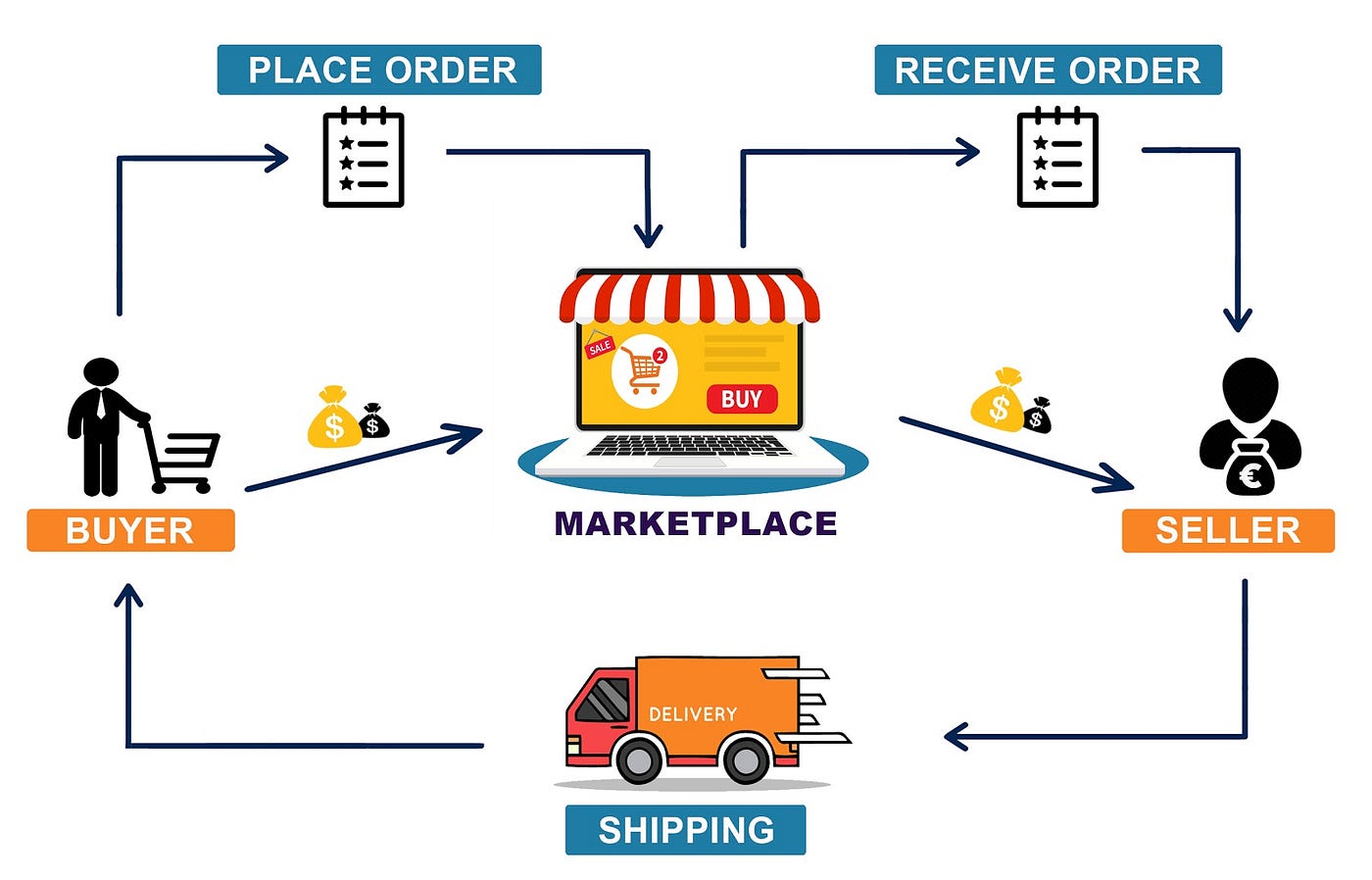
Here's how multivendor business model works:

Packaging and shipping

Although payment is mostly handled by the multivendor store, there are two common approaches to packaging and shipping:

In order to preserve their brand identification, multi-seller store owners typically supply the packing material (some for free, some for a price ).

Payment processing

Strong payment processing capabilities are packed into multivendor stores to assist businesses in attracting customers with certain payment preferences. Payment methods accepted by contemporary e-commerce platforms include credit cards, debit cards, net banking, gift cards, mobile wallets, and COD.

Owners of multivendor stores handle all payments and, after a few days of successful delivery, repay the amount owed to each vendor. Store to store differences exist in the length of time it takes for owners to pay their vendors.

Profit generation

Large volumes of traffic to multi-seller e-commerce platforms present enormous opportunities for monetization. The following are some strategies for making money with a multivendor store:

Commission on every product sold : For store owners, this is their primary revenue stream. Every goods sold by store owners is subject to a tiny commission, from which the seller is credited with the remaining amount.

In-store advertising: Vendors who are willing to pay a charge to have their products shown in-store can take advantage of in-store advertising offered by multi-seller platforms that receive millions of visits daily. Flipkart benefits greatly from this.

Exclusive seller: Large user bases on their online stores allow them to become exclusive retailers of newly released goods from well-known companies. As a way to drive initial sales without having to pay supply chain costs, smartphone firms frequently designate websites like Amazon as their official vendors.

Flagship products:Many large e-commerce sites start their flagship products by going straight to the makers. Multivendor stores are able to increase their earnings by doing away with the middlemen. E-commerce companies occasionally also cause market disruptions by launching a previously unheard-of product. The Amazon Kindle is the ideal illustration of this.

Memberships: The majority of internet retailers offer store memberships that provide customers with extra savings, simpler returns, free delivery, and improved customer service. These kinds of memberships are quite well-liked by regular buyers.

Although the monetization strategies listed above are some of the more significant ones available to owners of multivendor stores, there are several other little ideas that can be tried out to increase revenue. That being stated, the freedom to incorporate each of the aforementioned monetization options can only be ensured by a robust multivendor shop software. Thus, when making an investment in a multivendor store builder, remember to verify this!
Why the rush into the multi-vendor marketplace?

The topic of multivendor platforms is relatively new. This is a result of e-commerce business owners being unaware of the advantages of starting and joining a multi-vendor online store. The following are benefits of opening a multi-seller online store:

The advantages are substantial for owners of multi-vendor platforms and are thoroughly discussed in the business model section. If you missed it, please read through it by scrolling above!

Here’s why wholesalers, brands, and entrepreneurs are either launching multi-vendor stores or joining them:

  • Small sellers who wish to increase their sales but don't want to spend money setting up an internet business join multi-vendor platforms.
  • Sellers with dreams to sell nationwide or globally without making a huge investment join multi-seller platforms.
  • Speeding up sales and growth is easier for ecommerce entrepreneurs by joining marketplaces with a huge audience base.

For consumers, the value is generated mainly in the form of:

  • Limitless choice of products
  • Competitive pricing
  • Better support
  • Deep discounts
  • Simplified decision making through reviews.

Although there are many advantages to starting a multi-vendor online business, creating one can be challenging for someone who isn't familiar with the available possibilities. This leads us to the final query we will address in this blog post.

How can a multi-vendor marketplace be launched?

Building it from scratch : Developing custom e-commerce is necessary when starting from scratch to create a multi-seller marketplace. This implies that in order to create your platform from the ground up, you will need to assemble a group of analysts, engineers, and designers.

This process is not only time-consuming but costly as well. Established brands prefer this model to get everything just the way they want.

Using marketplace software : Since not everyone is interested in custom development, entrepreneurs often start their businesses with multivendor store builders. These solutions guarantee cost savings, speedy turnaround times, and all the other requirements for launching a successful multi-seller business.

This process is not only time-consuming but costly as well. Established brands prefer this model to get everything just the way they want.

Top software for multi-vendor marketplaces in 2020–21

Although there have been a lot of multi-seller platform builders in the market lately, the majority of them are just outdated SaaS-based online store launchers that allow for third-party plugins and integrations to handle many sellers. We made the decision to create Swiftkart because the e-commerce industry deserves better.

Aatulyaa IT Solutions

SUITE NO-304 , THIRD FLOOR, PROCAPITUS BUSINESS PARK, D-247/4A,SECTOR-63, NOIDA, (U.P) , INDIA - 201309

info@aatulyaa.com

8510855698

© Aatulyaa IT Solutions. All Rights Reserved. Designed by Aatulyaa